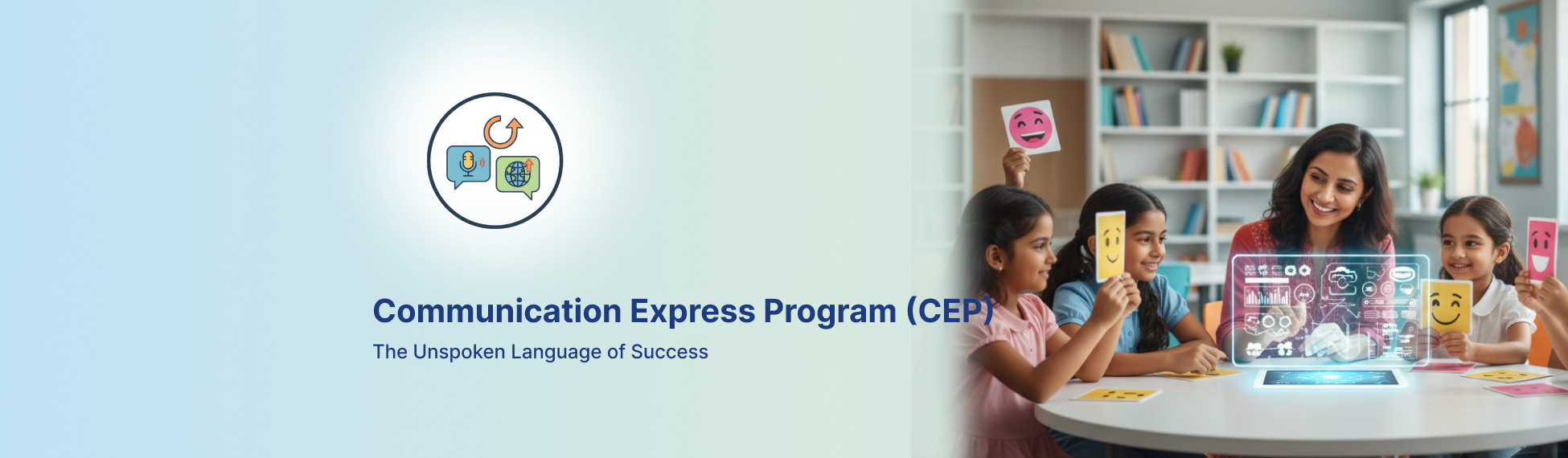
Communication Express Program (CEP)
Introduction: The Unspoken Language of Success
In an increasingly interconnected and competitive world, effective communication transcends mere academic proficiency; it is the cornerstone of personal confidence, social influence, and professional success. Parents universally desire their children to articulate thoughts clearly, express ideas eloquently, and interact confidently. Schools, too, strive to cultivate high levels of communication fluency, yet conventional approaches often fall short, leaving a noticeable gap between aspiration and outcome. This deficit can lead to students struggling with presentations, interviews, group discussions, and even daily interactions, impacting their overall personality and future prospects. Moreover, in an era where soft skills are paramount, the ability to communicate effortlessly significantly enhances a student's holistic development and a school's overall reputation.
Paramita Comprehensive Educational Services (PCES), through its edvance+ initiative, recognizes communication as a vital life skill essential for "building ignited minds and true humans for the futuristic world." Drawing upon Paramita Schools' three decades of revolutionary experience in enhancing student potential, edvance+ proudly introduces the Communication Express Program (CEP). This year-long, embedded program is a powerful tool designed to transcend traditional language instruction, establishing a new culture of effortless communication within schools and positively impacting student personality and overall school ratings in the community.
CEP's Transformative Approach:
Year-Long, Embedded, and Impact-Driven
CEP is distinguished by its innovative design as a year-long communication skills development program that is deeply embedded into the Annual Calendar of the school. This ensures that communication development is not a one-off event but a continuous process integrated into the fabric of daily school life.
The Core Challenge: Bridging the Communication Fluency Gap
Many K-12 institutions face significant hurdles in effectively developing students' communication skills:
- Limited Opportunities for Authentic Practice: Classroom settings often prioritize written assignments or teacher-led discussions, offering insufficient opportunities for students to engage in spontaneous, authentic oral communication.
- Fear of Public Speaking: A pervasive fear of speaking in front of peers or adults inhibits many students from developing their oratorical skills.
- Focus on Grammar Over Fluency: Traditional language teaching often overemphasizes grammatical correctness, leading students to self-censor and prioritize accuracy over fluidity and confident expression.
- Lack of Integrated Approach: Communication skills are frequently treated as a separate subject or an add-on, rather than being interwoven across the curriculum and throughout the school's annual calendar.
- Inadequate Teacher Training: Many teachers may lack the specialized training or resources to effectively coach and facilitate advanced communication skills beyond basic classroom interactions.
- Disconnection from Real-World Relevance: Students may not perceive the direct relevance of communication skills to their daily lives or future careers, reducing their motivation to improve.
- Impact on Personality: Poor communication can lead to shyness, reduced participation, and a lack of self-confidence, hindering overall personality development.
The Communication Express Program (CEP) directly addresses these challenges by offering a structured, continuous, and practical framework for holistic communication development.
Key Features and Methodologies of CEP
Communication skills are not taught in isolation. The CEP provides frameworks for teachers across all subjects to integrate communication practice into their lessons. This could involve presentation tasks in science, debate clubs in social studies, storytelling in language arts, and group discussions in mathematics, making communication relevant and contextual.
The program outlines regular opportunities for students to practice various forms of communication (e.g., extemporaneous speaking, prepared speeches, group discussions, debates, interviewing skills). Crucially, it incorporates systematic, constructive feedback mechanisms, often involving peer feedback and educator coaching.
While accuracy is important, CEP prioritizes developing fluency and confidence. Students are encouraged to express themselves freely, with a focus on conveying ideas effectively, rather than being overly concerned with minor grammatical errors. This builds psychological safety for risk-taking in communication.
The program is structured into modules addressing different facets of communication:
- Verbal Communication: Pronunciation, articulation, modulation, public speaking etiquette, effective questioning, active listening.
- Non-Verbal Communication: Body language, eye contact, gestures, facial expressions.
- Written Communication: Clear and concise writing for various purposes (formal/informal emails, reports, creative writing).
- Interpersonal Communication: Conflict resolution, empathy, collaboration, negotiation.
- Presentation Skills: Structuring presentations, engaging an audience, using visual aids effectively.
Students engage in simulated real-world communication scenarios, such as mock interviews, product pitches, news reporting, and community addresses, to prepare them for practical situations.
edvance+ provides specialized training for educators to become effective communication coaches. This includes techniques for active listening, providing constructive feedback, creating supportive environments, and modeling proficient communication themselves.
Utilization of audio/video recording for self-assessment, online collaboration tools for group projects, and digital platforms for sharing presentations can enhance the program's effectiveness and reach.
Benefits for Students, Schools, and the Community
The implementation of the Communication Express Program (CEP) yields transformative outcomes for all stakeholders:
- Higher Communication Fluency: Students develop the ability to articulate their thoughts and ideas effortlessly and clearly, both orally and in writing.
- Enhanced Confidence and Self-Esteem: Overcoming the fear of public speaking and interacting effectively significantly boosts self-confidence, influencing overall personality.
- Improved Interpersonal Skills: Students learn to listen actively, empathize, collaborate, and navigate social situations with greater ease.
- Stronger Personality Development: Effective communication is intrinsically linked to charisma, leadership, and a well-rounded personality.
- Future Readiness: Equips students with a critical soft skill highly valued in higher education, competitive exams, and all professional fields.
- Better Academic Performance: Clear communication aids in expressing understanding in exams, presentations, and group projects.
- Establishment of a New Communication Culture: CEP instills a school-wide ethos where confident, clear, and respectful communication is valued and practiced by everyone.
- Increased School Ratings and Reputation: As students begin to communicate effortlessly, the school's reputation in the community will naturally go up.
- Attraction of Prospective Students: A school known for producing articulate and confident students becomes highly attractive to parents seeking holistic development.
- Enhanced Teacher-Student and Parent-School Communication: Improved communication skills among students can positively influence interactions within the entire school ecosystem.
- Alignment with NEP 2020: Supports the policy's emphasis on holistic development and 21st-century skills.
- More Engaged Citizens: Students who can communicate effectively are better equipped to participate in community discussions, advocate for causes, and contribute meaningfully to society.
- Future Leaders: The program cultivates future leaders who can inspire, persuade, and collaborate effectively.
Conclusion: Empowering Voices for a Brighter Future
The Communication Express Program (CEP) by edvance+ is a strategic imperative for K-12 schools aiming to truly empower their students for the future. By embedding comprehensive communication skills development into the annual calendar and embedding a culture of confident expression, CEP transcends traditional language teaching. It directly addresses the aspirations of parents and the developmental needs of students, ensuring that they not only achieve higher levels of communication fluency but also develop stronger, more influential personalities. As Paramita has revolutionized student communication using this tool, edvance+ is poised to replicate this success across India, helping schools elevate their standing in the community and, most importantly, equip every child to be a "responsible, respectful, reliable, and remarkable" communicator ready for the futuristic world.